Case study

Real-Time Order & Materials-Usage Platform

From paper trail to production intelligence.

Laravel 10 Multi-site workflow Live usage data Automated reporting
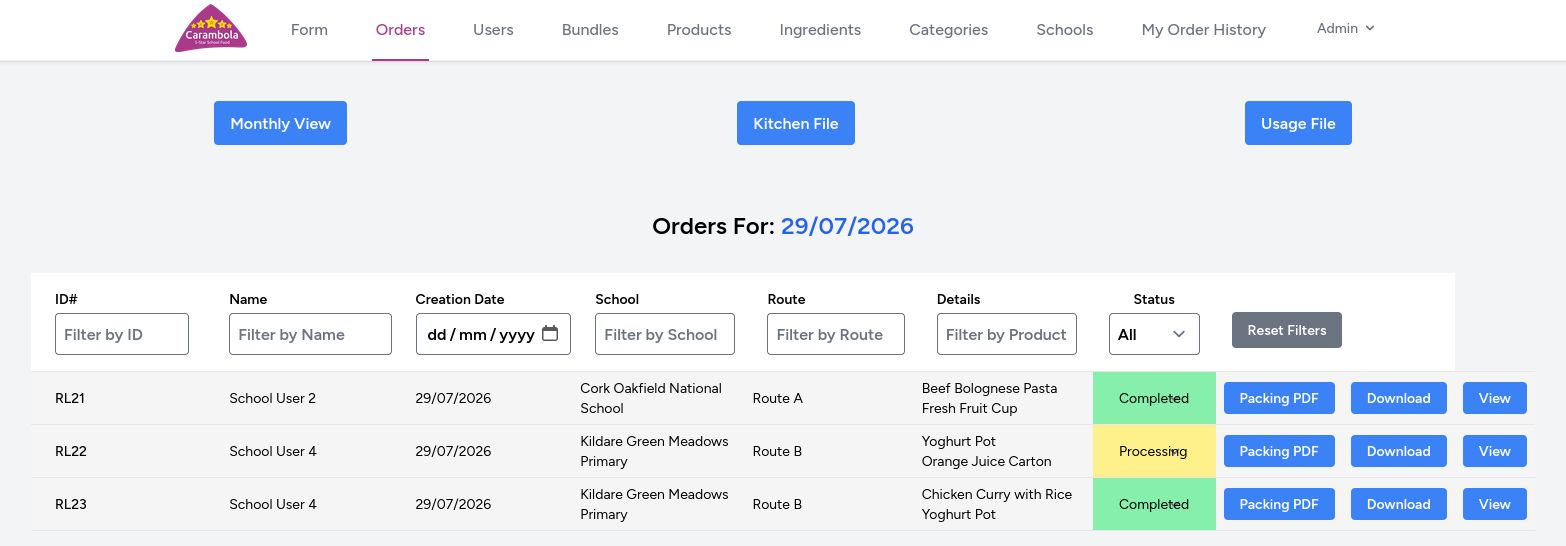
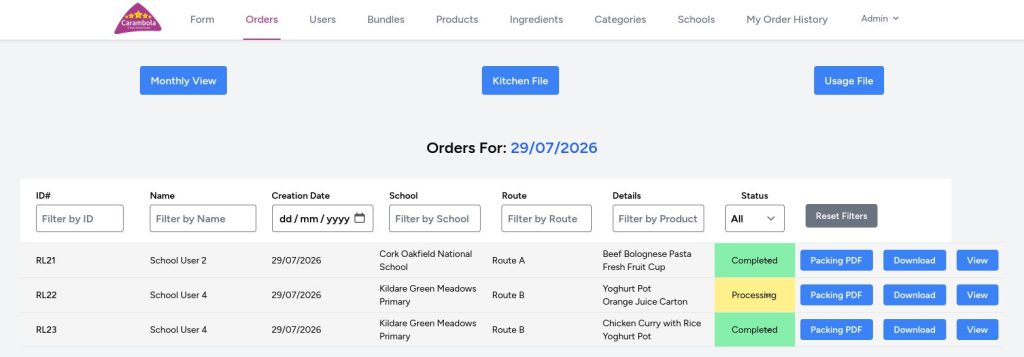
Daily order overview in the real-time operations platform

Submit / Calculate / Produce / Report
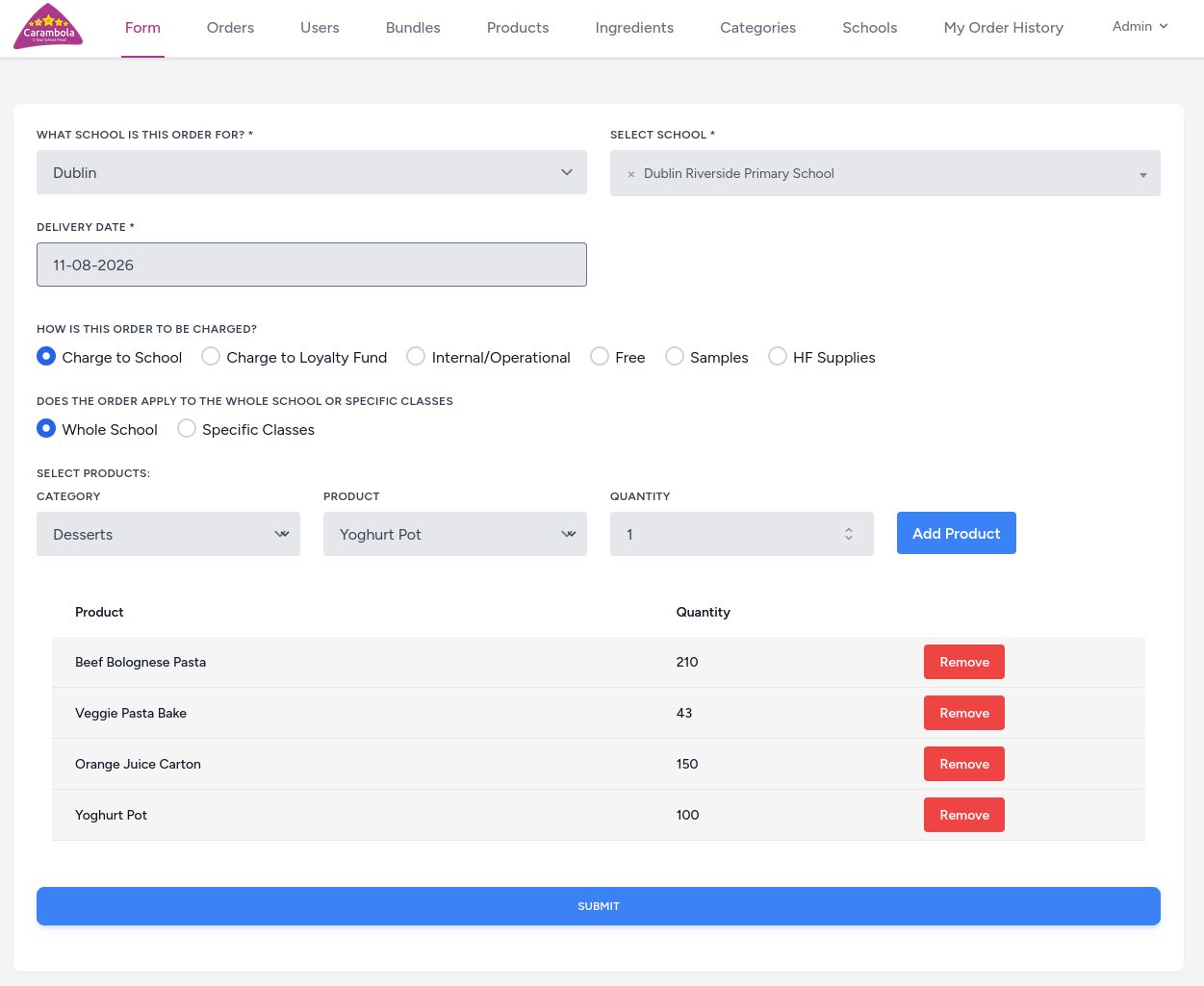
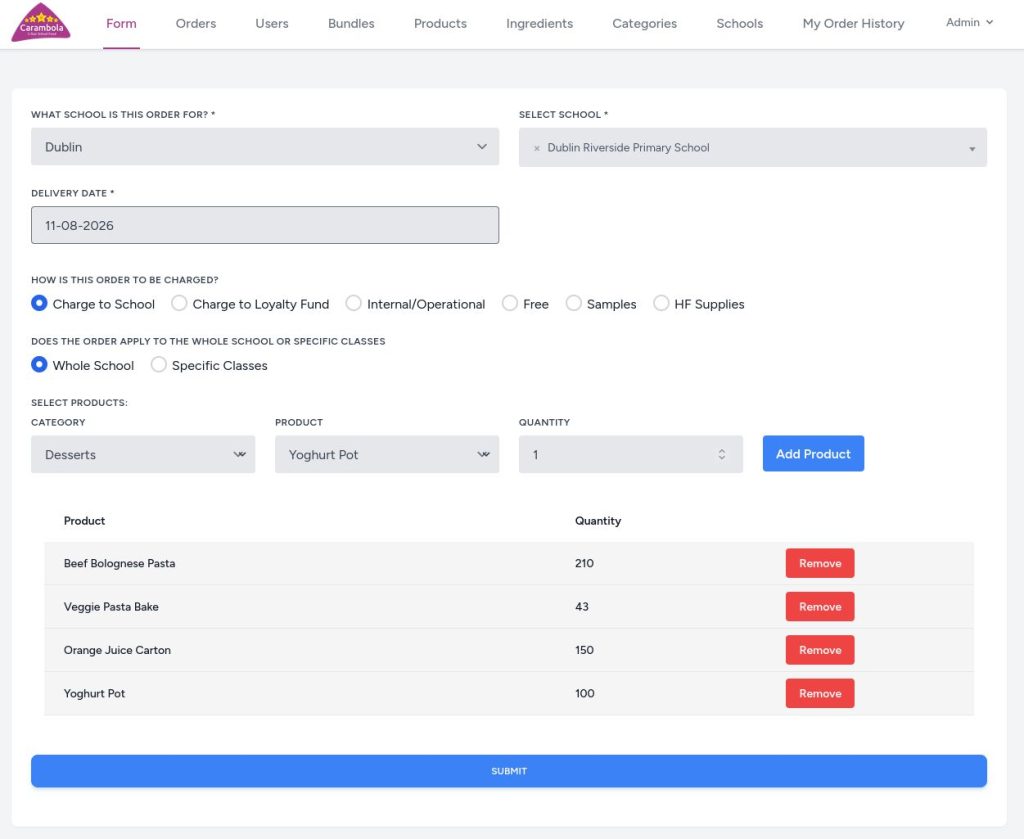
Structured digital order form replacing the previous paper process

Structured at entry. Available everywhere instantly.

The challenge

A multi-site operation was running on paper and re-keyed data.

Dozens of sites submitted orders that had to be converted quickly into production plans and accurate material-consumption figures.

End users completed paper or ad-hoc forms, then staff manually entered the same information into spreadsheets. The process was slow, difficult to reconcile and offered no dependable single source of truth.

01

Paper-led ordering

Information started outside the system, making every later step dependent on manual handling.

02

Repeated data entry

Staff had to re-key orders into spreadsheets before production or stock usage could be calculated.

03

Delayed reconciliation

Recorded usage could lag behind what had actually been ordered, produced and consumed.

What we built

One platform from submission to final report.

01

Role-gated digital workflow

Administrators, operators and standard users access the tools they need and submit validated entries directly to one central database.

02

Bill-of-materials data model

Products, bundles and kits are connected to their underlying components, with an exact quantity or weight held for every unit.

03

Automatic usage calculations

Every submission is broken down to component level and aggregated into accurate daily material-consumption totals.

04

Reporting and document outputs

Spreadsheet and CSV exports, packing sheets and record-level PDFs are produced from the same validated data.

05

Rules, status and audit visibility

Submission windows follow scheduled dates while each record moves through a visible status lifecycle from submission to completion.
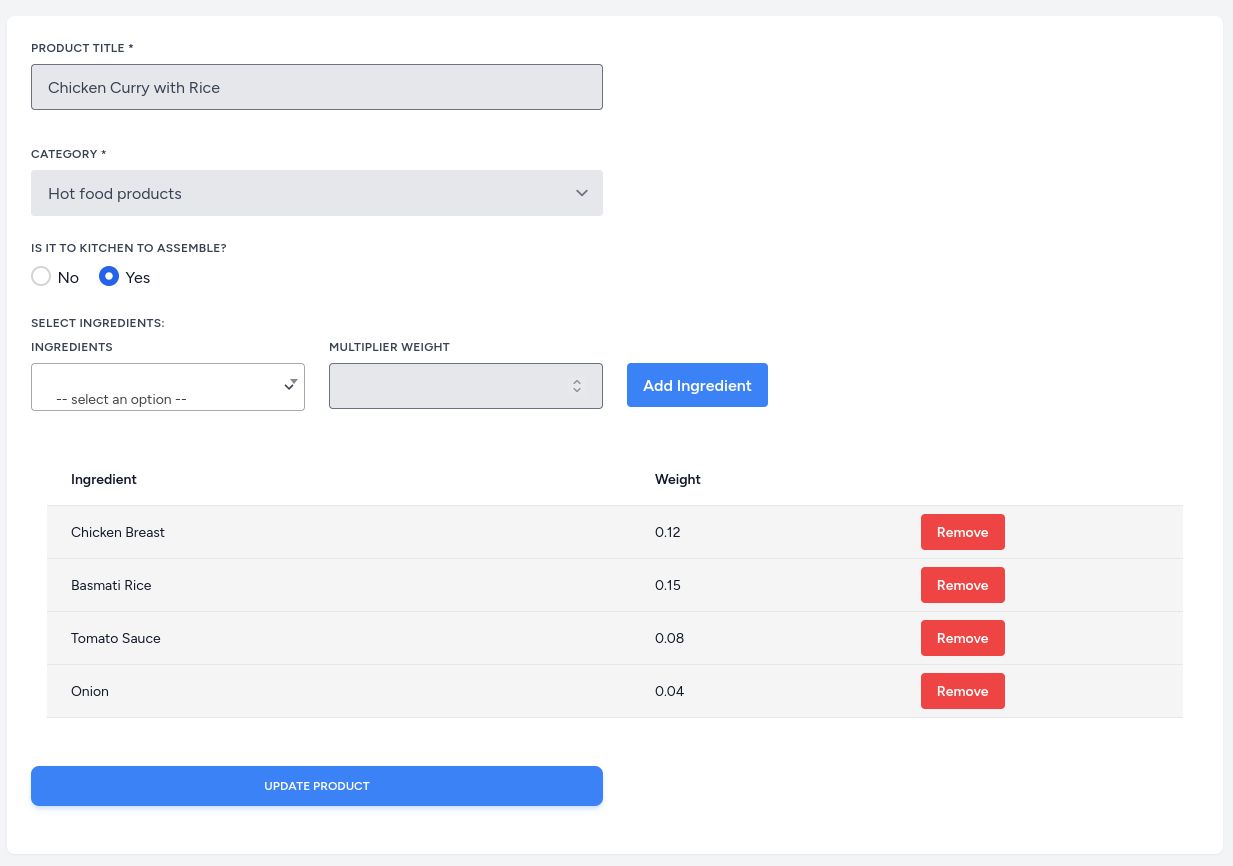
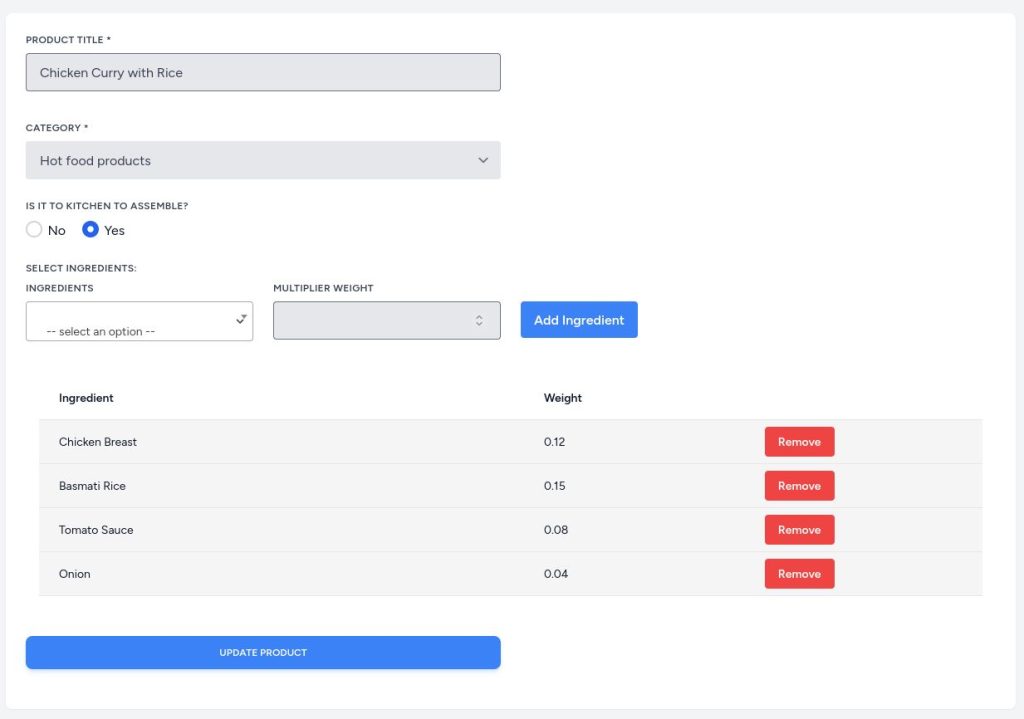
Product editor showing component-level material quantities

A genuine component structure—not a flat order list.

The connected workflow

One record. Every operational output.

The same information flows from structured entry to component-level usage, production planning, printable documentation and downstream reporting. Nothing is retyped between submission and final output.
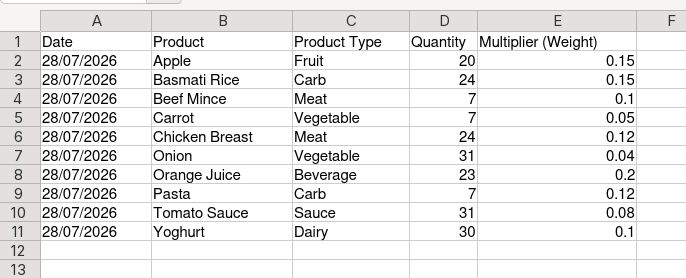
Automatically calculated materials-usage report

Component-level consumption calculated automatically.
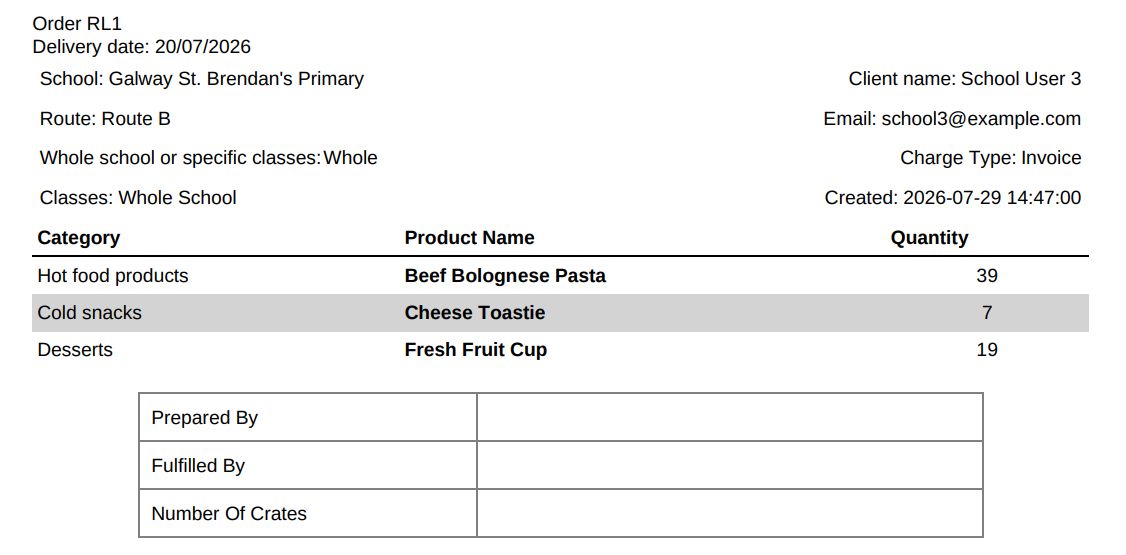
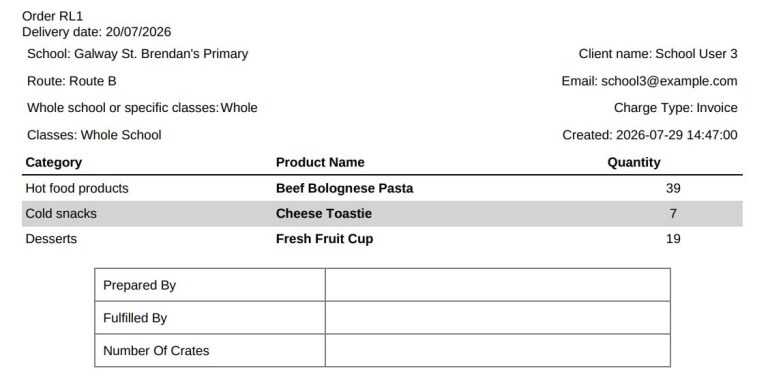
Packing summary PDF generated by the platform

Printable documents generated from the same live record.

The result

Same-day visibility replaced days of manual reconciliation.

Paper-based collection became a validated, real-time workflow backed by one central database.

Operations staff can see activity across every site, move records through their status lifecycle and produce current planning, consumption and document outputs without reconstructing the data in a spreadsheet.

The result is faster decision-making, a cleaner audit trail and component-accurate information that can be exported for downstream accounting or stock systems.

Real-timeTraceableBuilt to scale
LIVE

Central data

Submissions are validated and recorded as soon as users complete them.

DAY

Same-day usage

Material consumption is available without waiting for manual tallies.

BOM

Component accuracy

Bundles and products resolve to exact underlying quantities and weights.

PDF

Ready-to-use outputs

Packing documents and structured exports are generated from live records.
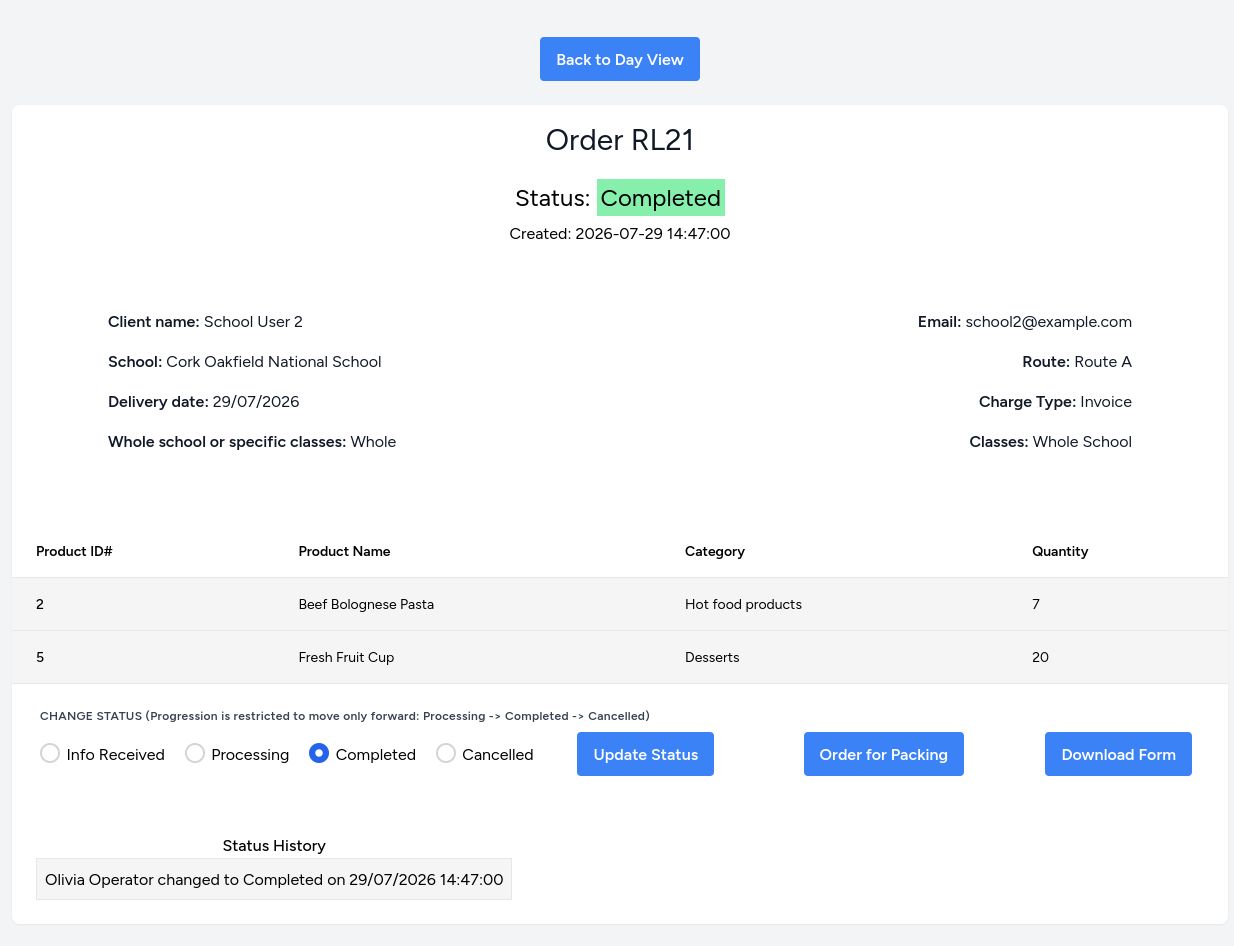
Order-management view in the completed platform

Technology used

Laravel 10PHP 8.1MySQLTailwind CSSAlpine.jsViteLaravel SanctumPhpSpreadsheetPDF tooling

Replace the paper trail

Still rebuilding operational data by hand?

We build custom platforms that turn complex manual processes into clear, connected digital workflows.

Start a project
OVERVIEW

We designed and built a custom web platform (Laravel/PHP, Tailwind, Alpine.js, Vite) that replaced a paper-based ordering and stock-tracking process with a real-time online dashboard for a multi-site operation. Dozens of sites submit structured orders that must be turned, quickly and accurately, into production plans and component/material consumption figures.

THE PROBLEM (before)

– End users filled in paper/ad-hoc order forms by hand.
– Staff had to manually re-key what was ordered into spreadsheets to know what to produce and what stock had been consumed.
– No single source of truth, slow turnaround, and reconciliation errors between what was actually used and what was recorded.

THE SOLUTION (what we built)

1. Real-time digital checkoff dashboard
Users log in to a role-gated web app (admin / operator / standard user) and submit structured entries online instead of on paper. Entries are validated and written straight to the central database – no re-keying, no lag between “what happened” and “what the system knows.”

2. Bill-of-materials-style data model
The data model is built around components, not flat line items: items can be grouped into bundles/kits with a defined quantity of each component per bundle, and every item is linked to its underlying sub-components, each with an exact weight/quantity per unit – a genuine parts-explosion structure that mirrors how a real bill of materials is composed, rather than a simple order list.

3. Automatic consumption/usage rollups
The platform doesn’t just record entries – it explodes every submission down to component level and automatically aggregates real material usage per day, with no manual recalculation. Staff get accurate, up-to-date consumption figures instead of waiting days for someone to tally paper records by hand.

4. Reporting and export pipeline
The system generates spreadsheet/CSV exports of activity, statuses, and consumption structured for import into downstream accounting or stock systems, and auto-generated PDF documents per record, including packing/summary sheets – built with both PDF generation and PDF manipulation tooling, so the platform can produce and process document-based outputs, not just raw data.

5. Business-rule automation and audit trail
Submission windows open and close automatically on scheduled dates with no manual admin intervention, and every record is tracked through a full status lifecycle (submitted -> in progress -> completed/cancelled), giving full visibility into where each item stands at any time.

HOW IT WORKS, STEP BY STEP

1. An admin defines the catalogue of items, their component breakdown, and how they group into bundles/kits – this becomes the single source of truth for what “one unit” of anything actually consists of.
2. Field/site users log into a simple, guided online form and submit what they need or what they’ve used. No paper, no separate re-entry step.
3. The submission lands in the central database immediately and is assigned a trackable status.
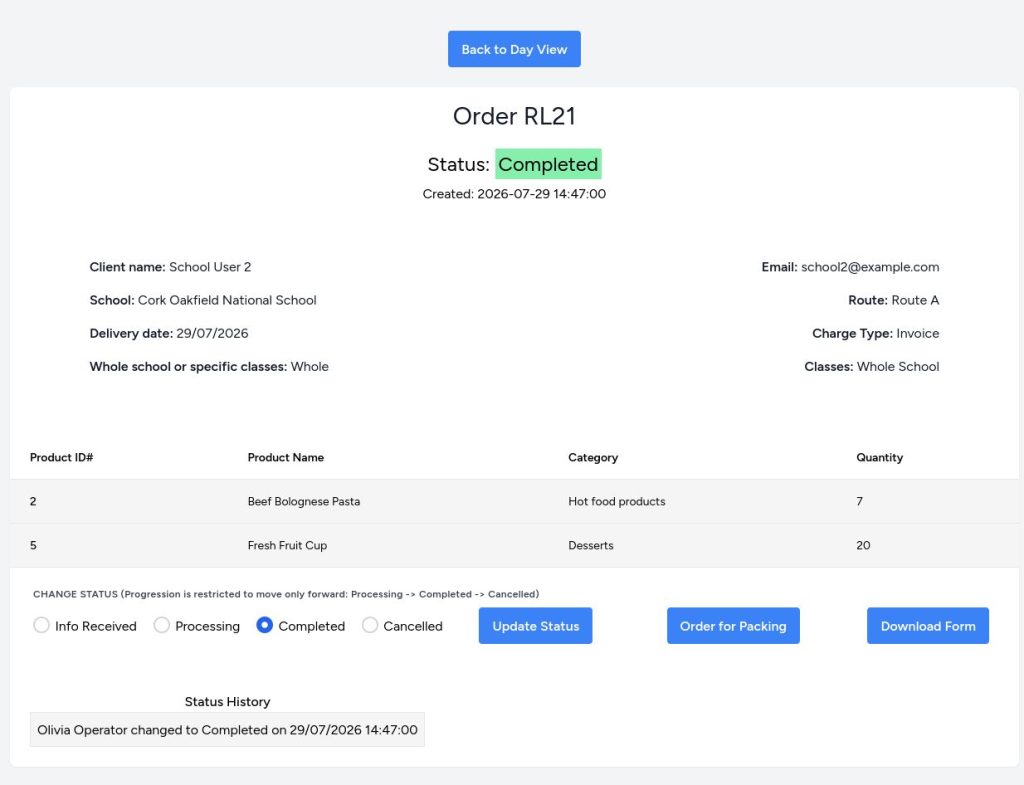
4. Operations staff see a live day-by-day and month-by-month view of every submission across all sites, filterable and sortable, with one-click status changes.
5. From that same view, the system generates a same-day production/preparation summary, a component-level usage/consumption report (auto-calculated, not hand-tallied), a printable packing/summary PDF per submission, and a full export of activity for external reporting or accounting.
6. Nothing is re-typed at any stage between submission and final report – the same record flows straight through from entry to analysis.

WHY IT MATTERS

The value isn’t the web form – it’s collapsing a multi-day, manual, error-prone paper trail into a same-day, validated, component-accurate digital record that’s immediately usable for planning, reporting, and reconciliation. The same architecture – structured checkoff entry, component-level explosion, automatic rollups, document generation, and clean export — applies directly to any operation currently relying on paper checklists, printed forms, or manual spreadsheet re-entry to track what was actually used or produced.

RESULTS

– Manual, paper-driven, error-prone data collection replaced with a real-time digital workflow backed by a proper database.
– Component-level usage data available same-day instead of after days of manual reconciliation.
– Role-based access control, validation, reporting, and export delivered as one integrated platform, built end-to-end in-house.

TECH STACK

Laravel 10 (PHP 8.1), MySQL, Tailwind CSS, Alpine.js, Vite, PhpSpreadsheet (exports), PDF generation and manipulation tooling, Laravel Sanctum (auth)

Wait a moment

Carta